
So, you want to look at land…
Usually for me the first step is Zillow, or a similar MLS
site.

If you have looked for bare property before, you probably already know. You rarely ever get a “real” address. It will say something like “0000 example road exampleton, WA 98000” or as below. This is because usually unimproved land does not have an address assigned yet. Most agents will lead you to the road it’s on or will be on once an address is assigned. Still, it can be a challenge to find and research from this.
Sometimes you get really lucky and they include a parcel number for you

In any case, the next part is pretty similar.
With either a road name and the acreage, or best case scenario,
a parcel number, it is possible to find more information on this land. Go to
the county tax parcel
website. Type in your google search bar “______ county tax parcel
search”

Once you find it, open the site, and find the search bar on
the county site. Type in the road name or parcel number if you have it. Some
sites will not help you out with automatic road name options and expect you to
know what you’re looking for. Hard to do with a partial address. A trick I have
found with these sites is you can use the % sign before the road name to conduct a “wild card”
search. This will give you a list of all addresses on that road. Of course you
are looking for an address that doesn’t exist yet so you will have to click on
a random address, click on map, and search around the area that way. You may
find the agent misspelled the road name so if it does not come up right away,
try other spellings. We’re all human here.

The next part is the hard, tedious part. You will see a map
with all the parcels there. If you are looking for a standard 5.0 acre parcel
it may be hard to find. But most parcels are not exact whole numbers and this
is very helpful in narrowing down your search. Also, the property here has a
distinct bend to it which helps. Sometimes I just have to click on one, see how
much acreage it has, and either look for larger or smaller parcels based on
that. (I told you this part was tedious). Once again. If you can, get the
parcel number from the listing or call the listing agent and ask.

But, if you find yourself with a particularly difficult
listing and an agent that insists you have your agent talk to them or sign a
contract.. you may need to know this information. I’ve been there. Any of those
red boxes there are parcels with addresses on this road. Reminder that you are
looking for something that does not have an address so I’d start with the
larger chunks that are not red.


Here’s where that lead. Now I know to look for parcels about
4 times the size

Ok, skipping ahead. I used the approximate size and features
of the land such as that very round corner along the road and found the parcel.
But I made sure to check that the land matched up with the parcel size I was
looking for and it all checks out. No situs address, same sweeping corner, same
distance from the water, and same parcel size. In my case, same parcel number
too. If you are so lucky to have that information
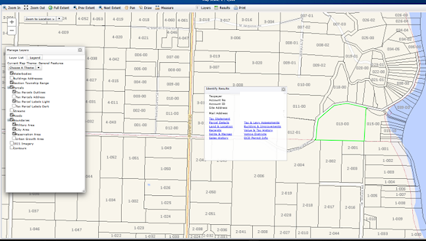
Now, the fun part begins. I highly recommend looking at the
following before wasting your time hunting down a piece of land in person. Geology, water, critical areas, zoning,
elevation. Also good to know and public information is when and for how much the land was
last sold. This applies to homes, too. Now, things change obviously.
If they bought after the 08 crash and before the climb, you are not likely to
negotiate that much with them. But sometimes you find they just bought the
property, have made no improvements as per the county records, and are asking 6
times what they paid. Sometimes, and not always, if it is listed a while and
this is the case they may negotiate a bit. Or it may just turn you off from the
deal completely. Either way, more information, right? There are also some good
links to check out under details. It is also possible to find out is how much taxes are on this
land, and if the tax payments are up to date. If taxes are late, this may be more of a
motivated seller than the listing leads on.


Water
Critical areas “Whaat
R critical areas.”
Anyways… You want to see what kind of rivers, streams, and
wetlands are on the land. In this particular PNW area, this is usually my first
task. We have water all over and you can’t build a house over wetlands. Sometimes
the whole property is a wetland, making it basically impossible to use for anything
more than a place to visit and go for walks. (If that) This particular chunk of
land has a stream of water that literally borders the whole property. Already
it is unlikely you are going to be able to punch in a road without a little
bridge and if it’s a stream with salmon, it’s a huge headache if even possible
at all. This is great to know before you visit and fall in love with the
scenery. If you are still interested in the land, this could be a potential
bargaining opportunity knowing this information.
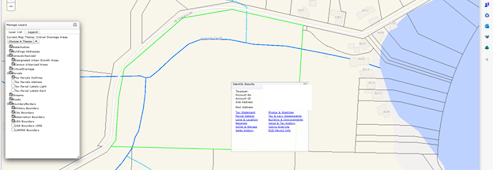
Ok, the following photo also shows “potential wetlands” meaning the area
around the stream is probably a bit swampy and the county may come in and
decide that its wetland. Maybe right after you buy it. Making that whole green
area unbuildable.

The next thing to look into is Zoning. For many this maybe the first thig
to look at, for me it’s the second as most 5 plus acre parcels are RR and you
can typically build 1 house on these which is what I’ve looked for in the past.
Ok, so to figure out zoning, on your layer list theme here, I’m going to click
on zoning

Awesome, right? Hehe.. OK, so the green with the giant “RR” is
not for railroad. It means “rural residential.” And it basically means you can put
up to one house per 5 acres typically. How do I know? That handy dandy legend
there on the side. You will see things like “1 DU per 5 ac” which means “1
Dwelling Unit per 5 acres” or you can see “1 DU per 10 ac” which would not work
in this case since it is less than 10 acres. Good stuff to know.

Next thing I typically look at is if this land is a cliff, ravine, etc. It’s
not always easy to build a house on land that resembles a rollercoaster. So
from my layer list, I’m going to click on the general features theme and make
sure I click on “Contours”

Now from the legend on the side I can see what the lines
represent. Gives me some idea of how hilly it is.
Ok, there is also the option of seeing what kind of utilities are nearby. Not
sure if this was available when I was property searching but here you can see
there are a couple culverts nearby. Nothing else popped up. There are neighbors
with houses though so utilities are probably close, at least power. Water and
septic are often not available on bare larger parcels of land. If they are, some
info is probably on the county records section.

Next is Geological hazards
area. Yikes. I noticed that the
legend for this was not quite right so I removed some of the hazard categories
to see what was what. This is all of them together. It appears that the orange
is seismic high hazard area
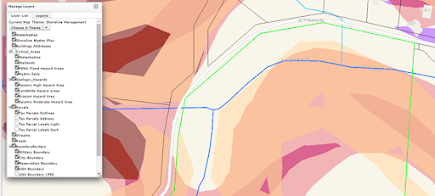
The red just under the orange appears to be Landslide hazard area.

And the purple is Erosion Hazard areas

If all of that is not enough to scare you off and you want
to go see this place in person… you can use the map measuring option to draw lines along the road
and figure out how far it is from a landmark, the nearest house, etc.

Last but not least, Play around with the site. There are so many
things you can find out about land on these county sites and its nice to have
an idea of what you are getting yourself into before writing your first offer.


